Should you take the uphill walk to San Miro from Sorico?

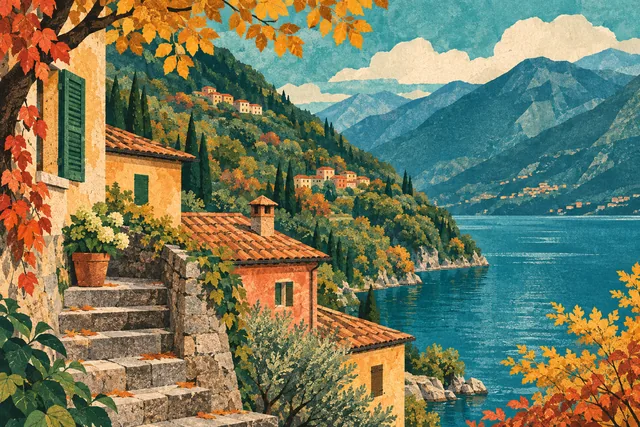
At Sorico, near the northern end of Lake Como, the way to the church of San Miro leaves the lower streets and takes a cobbled mule track uphill. The climb is part of the story. Small places associated with the hermit appear along the route before the churchyard comes into view. A visitor mainly interested in the river and the lake can stay below. Decide which outing suits your group while you are still in town, because the last part of the approach is a different kind of walk.
Begin in Sorico with the route in front of you
The local tourism organization’s Sorico itinerary starts in Piazza Cesare Battisti. It connects places in the town with the route toward San Miro and describes the upper section as unsuitable for people with reduced mobility because it follows rising mountain tracks. Read the directions and identify the road crossing before you go. A map measuring the straight line to the church cannot show the effort involved in cobbles, turns and the return downhill.
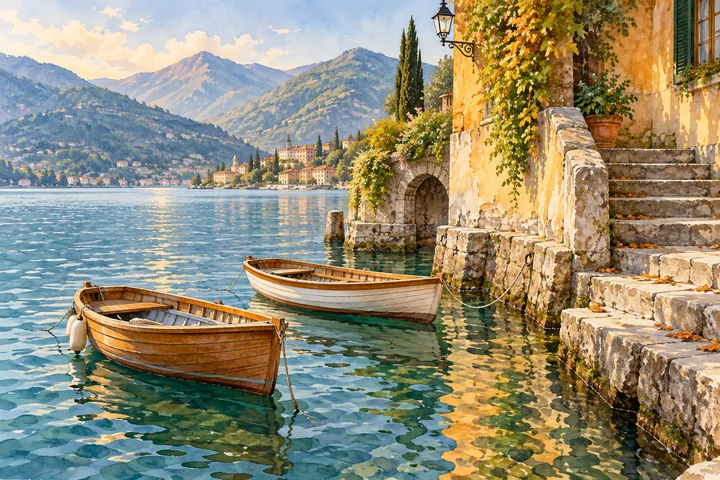
Spend a few minutes in the square before committing to the ascent. The church of Santo Stefano belongs to the lower town and provides a point of reference. The Mera meets Lake Como in this area, so a short outing can concentrate on where river, basin and mountain come together. The Pian di Spagna reserve guide explains another way to explore the landscape nearby. Its managed routes have their own starting points and arrangements.
Follow the old approach and its smaller landmarks
The local route follows part of the old Via Regina and a mule track into the woods. It identifies a stone tower along the way, now a private residence. Enjoy its position from the public route and continue. Beyond it are places associated with the hermit, including a cave commemorated by a small shrine and a spring protected by a chapel. The story gives an ordinary stretch of path a sequence of stopping places. There is more to look for than the building at the top.
Miro was associated in local devotion with rain in dry periods. The story that a spring appeared through his intervention belongs to that devotional tradition. The physical spring, the shelter built over it and the attention people have given it are visible records of the importance of water. Near the upper end of a lake fed by rivers, hopes about rain and fears of destructive water could belong to the same community.
Understand the church’s changing dedication
The local account of the church of San Miro traces a church on this site to an earlier dedication to Saint Michael and records a documentary mention in 1286. Miro lived later, dying at Sorico in 1381. In the fifteenth century his burial and veneration reshaped the identity of the church. Holding those dates in mind helps separate the age of the site from the saint’s life and from the decoration a visitor may encounter today.
The upper route reaches a portico and the entrance to the churchyard. Public access to the path does not establish that the church interior will be open when you arrive. Check locally if an interior visit is essential. If you find a service taking place, the worshipping community sets the pace. Even an exterior visit gives you the opportunity to see how the approach, the enclosure and the view turn a hillside building into a destination for pilgrims.
Leave room for the descent
Ask about recent path conditions, particularly after rain. Uneven stone that felt manageable on the way up can demand more attention on the way down. Plan for the daylight and bus or car arrangements at the bottom. People dividing into two groups can agree to meet back in the lower square rather than trying to coordinate from different parts of the hillside. For another northern lake church with a different relationship to water, compare Santa Maria del Tiglio in Gravedona.
The Domaso village guide gives a more level lakeside starting point for another day, while the Lake Como walking tours collection helps compare longer and shorter outings. At Sorico, one person may remember the old cobbles and another the way the river enters the lake. Both experiences belong to this place. Choosing between them before starting out gives everyone a better chance to notice what drew them to the north lake.
Sources & further reading
Turn a good read into a great day.
Find a highly rated Lake Como experience that brings these stories to life.
Explore related experiences →