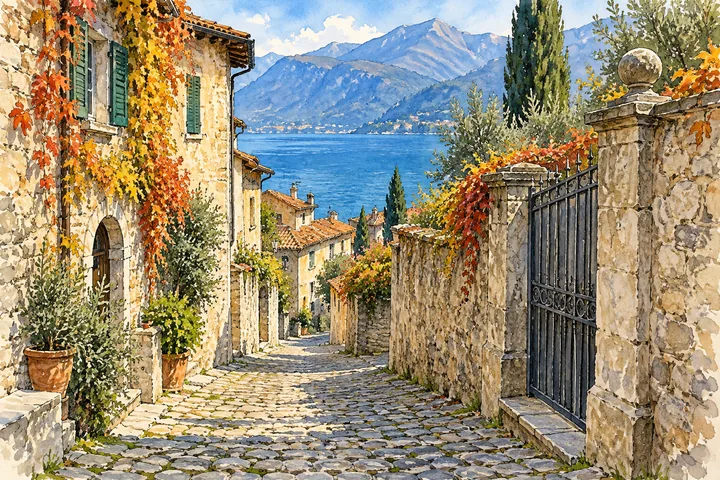
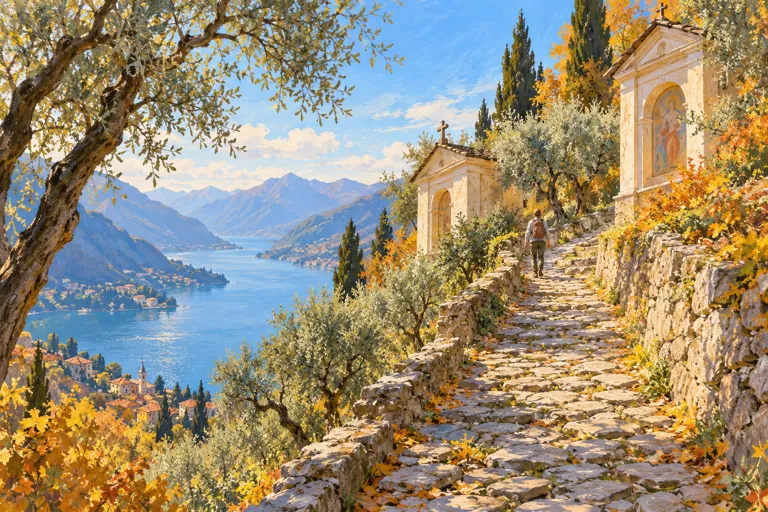
Torno on Lake Como: how do you connect the harbour and the churches?

Torno offers a useful lesson in reading a Lake Como village vertically. The water gives you one point of orientation; lanes and steps lead towards another. A satisfying visit does not require turning that movement into a strenuous hike. Start at the lakeside, decide how far you want to climb, and give the churches and ordinary village details enough attention to become more than scenery between transport connections.
Which places belong to the village route?
The Comune di Torno’s church information identifies Santa Tecla at Piazza Giovio and San Giovanni in its own piazza. These names provide useful anchors when checking a route. The municipal list also includes churches in higher settlements. Appearing on the same list does not mean that all of them form a short, level walk from the harbour.
Italia.it’s Torno introduction distinguishes the lakeside setting of Santa Tecla from the higher position of San Giovanni. Begin with that simple spatial relationship. Look at how a doorway, a small open space and a route between houses respond to the slope. Instead of trying to memorise the whole village, choose two points and notice what happens between them: the changing view of the lake, a narrowing passage, or a turn that makes the water disappear for a moment.
Keep historical labels precise. A church can include elements from different periods, so one feature should not supply a date for the entire building. If a guide identifies a portal or bell tower separately, preserve that distinction. You can admire a carved detail without deciding that every nearby stone is contemporary with it. The reward is a more layered village, rather than a prettier but less reliable story of everything surviving from one distant century.
How should you approach church interiors?
Treat interior access as something to confirm locally. An official description of a church establishes its interest; it is not a guarantee that the door will be open at the moment you arrive. Services and prayer take priority, and modest behaviour is appropriate even if the building is quiet. If it is closed, the exterior relationship between church, piazza and route still gives the visit substance.
When entry is permitted, choose one thing to look at carefully. Notice how light reaches the interior or how an image relates to the space around it. Read the available information before attaching a name or date. Avoid blocking the doorway while comparing photographs, and follow any photography instructions. A small church does not need a long checklist to justify a pause; ten attentive minutes can be more memorable than a hurried inventory of every surface.
Our guide to Brienno’s lanes and steps provides another village comparison, while Como’s Porta Torre turns similar close looking towards a city gateway. These are separate destinations. Use the comparison to sharpen your attention, not to assume that a map’s short-looking distance creates an effortless connection across or around the lake.
Where does a village walk become a different outing?
The regional inLombardia account of Torno also points towards higher places such as Montepiatto. That is a different planning proposition from strolling between the harbour and village churches. Check the route, ascent, daylight, weather and your footwear before adding it. A familiar place-name on a sign does not tell you how much effort the path requires.
The same restraint applies to villas and gardens mentioned in destination descriptions. A building visible from a public route is not automatically open to visitors. Do not enter a private gate or follow someone through an entrance because it appears to lead towards the lake. The pleasure of Torno can rest in its public spaces without an assumed invitation into every attractive property.
How do you fit Torno into a lake day?
Consult the Navigazione Laghi timetable for Lake Como for your actual date, direction and return connection. Seasonal services and individual departures matter more than the general statement that a village is on the lake. Keep the return arrangement in mind before settling into a long lunch. Our comparison of public ferries and private boats explains why their purposes and booking arrangements differ.
If you are arriving from Milan, distinguish the journey to the lake from an activity that starts beside it. Check the exact departure town in our Lake Como experience collection; a Milan departure is not a Torno departure. For a city day before or after the lake, Milan’s Brera Botanical Garden suggests another slow-looking visit, subject to its own current access. Leave Torno with one route clearly understood and one detail well remembered, rather than a plan that depends on doing everything.
Sources & further reading
Turn a good read into a great day.
Find a highly rated Lake Como experience that brings these stories to life.
Explore related experiences →