What should you notice at Como’s Basilica of Sant’Abbondio?

Sant’Abbondio gives a Como visit another centre of gravity. Instead of organizing every stop around the waterfront, turn your attention to a church where stone, columns and the movement of light can set the pace. You do not have to identify every painted scene to find the visit rewarding. Begin by looking at how the interior leads your eye through space.
This is a stop in Como city, not in Bellagio, Varenna or another lakeside town. That distinction matters when fitting it into a day. Our guide to choosing a Lake Como base helps keep journeys realistic; a name shared by the lake and its southern city can otherwise disguise a substantial transfer.
Start with the position in the city
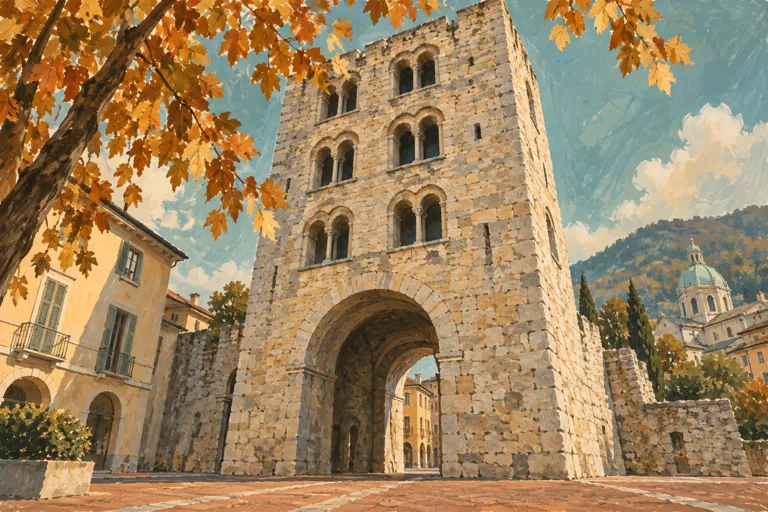
Como’s official church guide identifies Sant’Abbondio as a Romanesque monument outside the city walls. That is a useful geographical starting point. Plot the actual entrance before setting out, and allow the approach to be a purposeful walk rather than an assumed continuation of a lakeside promenade.
Think about what changes as you move away from the busiest visitor circuit. You may notice different street rhythms and a more ordinary working city. Avoid calling an area “undiscovered” simply because it was absent from your first itinerary. The more interesting question is how a familiar destination expands when you give one less obvious stop your full attention.
Let the architecture come before the details
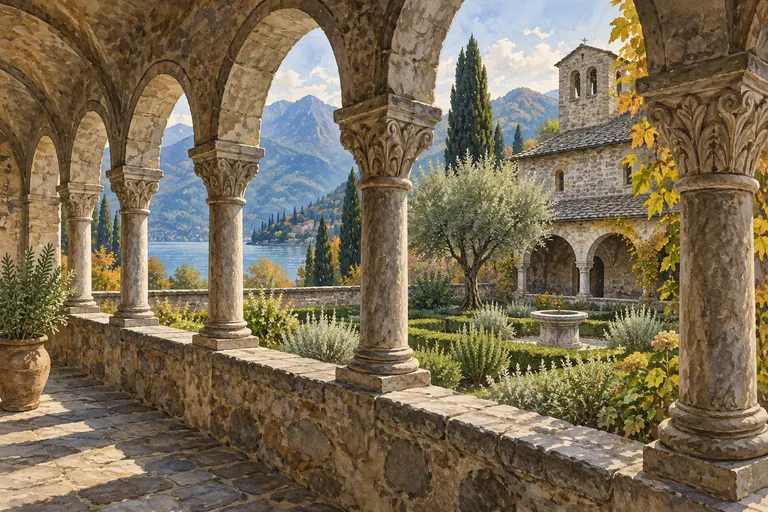
On entering, pause where you will not interrupt worship or block circulation. Follow the main direction of the space, then compare it with the side aisles. Notice the repeated supports and the contrast between near and distant surfaces. Looking at the overall arrangement first gives the smaller details a framework.
The Lombardy tourism description emphasizes the Romanesque character and the role of light in shaping the interior. Use that as an invitation to observe, rather than a phrase to repeat automatically. Where does the light fall during your visit? Which forms become clearer, and which remain partly in shadow?
Compare without flattening the differences
Our Como Cathedral article introduces another way to approach the city’s religious architecture. The buildings need not compete for the title of the one church you “must” see. A comparison is more productive when you ask how their spaces, surfaces and visiting circumstances differ.
Choose one feature to compare across the two, such as the treatment of an entrance or the impression of height. Keep the comparison modest and descriptive. You are building a vocabulary of looking, not trying to derive a complete architectural chronology from a short holiday visit. If a question becomes interesting, save it for a guide or further reading.
Keep painted decoration in context
When a decorated area catches your attention, look at how it sits within the architecture before concentrating on an individual figure. Is it high above you, framed by a curve or arranged in a sequence? The placement affects how you encounter it. Use interpretation available at the site to check identities and dates rather than confidently guessing from a familiar gesture.
Our Broletto walking guide offers another exercise in reading relationships between buildings and spaces. Together, the two stops can create a thoughtful Como city day without requiring a succession of long boat journeys or a tightly timed chain of attractions.
Check visiting arrangements and choose a clear route
Consult the basilica’s own website for current information and respect services and any local instructions. Church opening does not always mean unrestricted sightseeing. Ask about access requirements that matter to you, and avoid assuming that a general city description covers every entrance or interior route.
If you prefer guided interpretation, compare our Lake Como walking experiences and confirm that the itinerary actually starts in Como and includes Sant’Abbondio. A tour in another lake town is not a nearby substitute. Finish with an easy return towards your next stop, carrying one or two precise observations rather than a blur of monuments. That is a satisfying way to discover how much of Como lies beyond its postcard view.
Sources & further reading
Turn a good read into a great day.
Find a highly rated Lake Como experience that brings these stories to life.
Explore related experiences →