Corenno Plinio on Lake Como: is its steep village walk right for you?

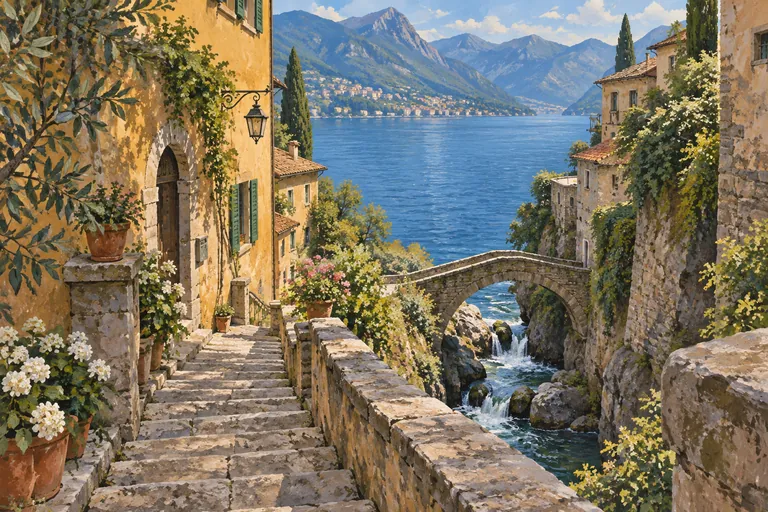
Corenno Plinio asks you to think vertically. From the upper village, lanes and stone steps descend towards Lake Como; the return is part of the same walk, even when the view encourages you to forget it. This is an appealing place for travellers who enjoy small-scale details and changing levels. It is less suitable as an unplanned stop when luggage, tired knees or a tightly timed connection are already demanding attention.
The village is a hamlet of Dervio on the lake’s eastern shore, not part of Como city or Bellagio. Start by locating it relative to where you are sleeping. Our Lake Como base guide explains why a place that looks nearby across the water may involve a more complicated journey than expected.
Decide how much climbing you actually want
The official village guide presents themed routes around the lanes, viewpoints and lakeside. Look at the route information before choosing one. A village can be compact in area yet demanding in gradient. A short distance on a map says little about the effort involved when steps account for much of the route.
Wear footwear that suits uneven stone and adapt the walk to the weather. After rain, take particular care rather than treating the stairways as a picturesque obstacle course. If someone in your group needs a step-free route, ask the local information service what is genuinely accessible from the intended arrival point. Do not promise that a harbour walk, viewpoint or monument can be reached without stairs unless that specific route is confirmed.
Make the descent optional. You can pause, notice a stone detail and turn back without having failed to visit the village. Agree a turning point with companions before anyone disappears around the next corner. A small group moves more comfortably when the slowest walker sets the pace rather than repeatedly being asked to catch up.
Separate public views from interior access
The regional tourism account identifies the Andreani castle, medieval tomb monuments and the belvedere as features of Corenno. Begin by looking at how these public-facing elements relate to the settlement. Fortification, religious life and the movement between hill and water can be explored as connected questions without turning the village into a single romantic medieval scene.
An exterior view of a castle does not establish that its interior is open. Likewise, the presence of a church on a route does not guarantee visitor access during a service or a special closure. Use the current village information to distinguish what can be seen from public space from any separately arranged visit. Respect doors, private courtyards and residents’ routes through the lanes.
When you look at the tomb monuments, describe their architectural differences before guessing at the people’s lives. Inscriptions, official interpretation and documented dates are stronger evidence than a story suggested by a dramatic photograph. Our Santa Maria del Tiglio guide offers another way to look at stonework around the lake, on a separate western-shore visit.
Plan the final part of the journey
The official practical page checked on 21 October 2026 describes approaches from Dervio or Dorio railway stations and from Dervio’s boat landing. It also refers to a summer shuttle. A seasonal service is not an autumn transport promise. Check the current connection and the walking route you intend to use, including the way back after your visit.
Do not assume that a boat ticket to Dervio places you at Corenno’s upper square. Our autumn ferry guide explains why dated timetables and named stops matter. The village’s practical information also describes an access contribution and ticket-point arrangements; consult the current rules before travelling rather than relying on an old price quoted elsewhere.
Choose a quiet visit over a long checklist
Bring water, leave space in the schedule and keep the village’s residential character in mind. A stairway is a route people use, not a private photography platform. Let others pass and avoid placing bags where they obstruct movement. The most memorable detail may be the way one doorway meets the rock or how the lake appears between two walls.
The Lake Como experiences collection can help you compare broader outings, but verify the actual departure town and named stops. A Milan departure remains a Milan departure; our sibling Milan-to-Lake Como planning guide explains that different starting point. Corenno works best when its steps and connections are accepted as part of the day, not discovered as a surprise at the end.
Sources & further reading
Turn a good read into a great day.
Find a highly rated Lake Como experience that brings these stories to life.
Explore related experiences →