Como’s San Carpoforo: how do you read an ancient church with an uncertain early history?

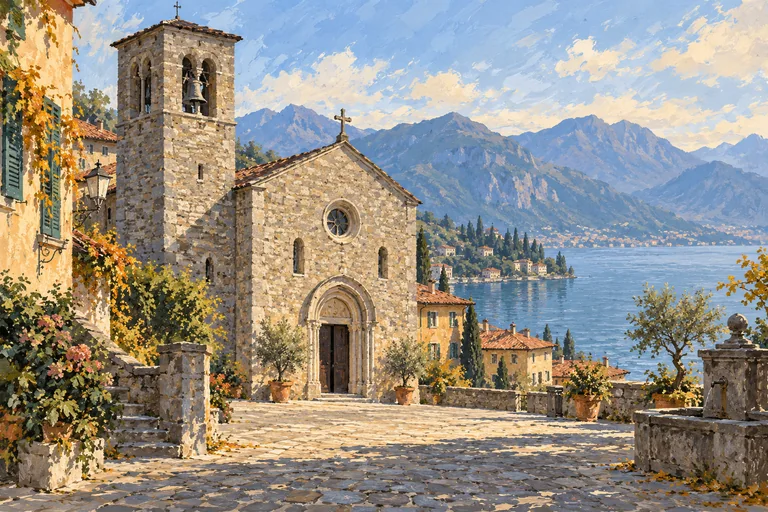
San Carpoforo asks a visitor to look beyond the familiar waterfront image of Como. The church lies in the Camerlata area, on the lower slopes associated with the Baradello hill, and its story reaches deep into the city’s Christian past. Yet an ancient association does not supply a simple construction date for every surviving wall. The most interesting way to visit is to keep foundation tradition, documented history, decoration and restoration in conversation.
Why is the early history not one straightforward date?
The city’s tourism account connects the site with the late fourth century and Como’s first bishop, Felice. A more detailed diocesan art-history introduction is cautious about the building’s construction period, noting early Christian inscriptions and identifying 1040 as the first documented date for its Benedictine abbey role. These statements have different scopes. An early religious association is not the same as a securely dated surviving structure.
That distinction can make a visit more enjoyable rather than less certain. Instead of trying to find one stone that “proves” an origin story, ask what kind of evidence supports each part of the account. An inscription, a written record and a visible building phase do not necessarily tell the same story. A careful guide can explain how those forms of evidence are combined and where uncertainty remains.
What later layers deserve attention?
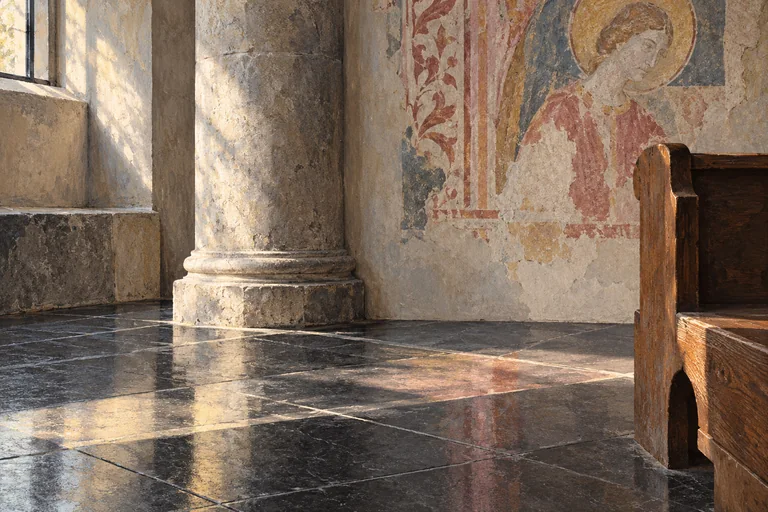
The diocese describes sixteenth-century decoration and later changes connected with the Gerolamite monastery, followed by restoration in the nineteenth and twentieth centuries towards presumed Romanesque forms. It also notes a late-seventeenth-century painted cycle in the sacristy. This is a church with more than one meaningful historical period. Calling it ancient should not make later work disappear from view.
Begin with the overall arrangement of volumes before concentrating on individual details. Look at the relation between solid wall, opening and roofline. Where access is allowed, compare the broad architectural impression with the decorative material identified by a reliable explanation. Avoid treating a plain surface as automatically earlier than a decorated one. Restoration choices, loss and continued use can all affect what appears simple today.
Can you see the sacristy on an ordinary visit?
Do not assume so. The diocesan page describes a particular guided event held on 21 June 2025, with special attention to the sacristy frescoes. That is evidence about the church’s heritage and about that past event. It is not an announcement of a current tour, a standing weekly appointment or unrestricted access to every room.
This distinction matters whenever an attractive photograph appears beside a dated event listing. First check the year, then the named spaces and the organiser. If a detail is the main reason you want to visit, ask whether it will actually be accessible on your intended date. A general church opening does not necessarily include ancillary rooms, and a past guided visit does not create a present booking route.
What should you confirm before travelling?
The city tourism entry lists variable opening. The diocesan parish directory provides the relevant Camerlata contact, but it should not be read as a promise of a sightseeing timetable. Establish the actual access arrangements and explain any particular mobility requirement. If you receive no confirmation, plan a visit that can remain worthwhile from authorised public space without depending on an interior.
Inside a working church, worship and local needs take precedence. Follow signs, keep conversation low and ask before photography. Outside, remain on public routes and do not use an apparently open side gate as permission to explore adjoining property. The pleasure of a modest architectural visit comes partly from giving the place the attention its scale invites.
How does the location change a Lake Como plan?
Start with the town you are actually in. San Carpoforo is in Como, not Bellagio, Varenna or a generic lake departure zone. A lake crossing and an urban transfer are separate legs of a journey. If you are staying elsewhere, check both before deciding that this is an easy addition to a waterfront afternoon. Leave room for the return connection rather than planning solely around arrival.
Our guides to San Fedele, the Pinacoteca Civica and Teatro Sociale offer different Como-focused options. Choose among them according to confirmed opening and your interests instead of trying to collect them all.
For a separate architectural comparison, Milan’s San Simpliciano guide also distinguishes ancient foundations from later fabric. In our Lake Como collection, check the actual meeting town and itinerary: a Milan departure is not a Como departure, and a general lake excursion does not guarantee San Carpoforo access. A successful visit leaves the uncertainty visible while making the surviving evidence more legible.
Sources & further reading
Turn a good read into a great day.
Find a highly rated Lake Como experience that brings these stories to life.
Explore related experiences →