Como Silk Museum: what can a loom tell you?

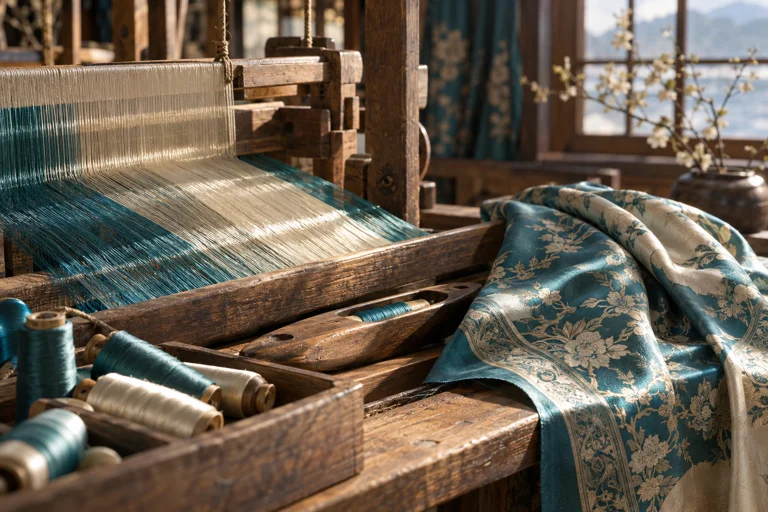
A loom can look like a complicated wooden puzzle until you give it one simple question: how does a collection of threads become a fabric? Como’s Silk Museum provides a setting for following that transformation, and for thinking about the people, decisions and repeated operations behind something we may otherwise admire only for its sheen.
The museum’s own introduction describes a collection of machinery, objects, documents, samples and working tools from the local textile industry. This is a visit about production as well as beauty. Our introduction to Como’s silk history sets out the wider connection; the museum lets you concentrate on the processes that make that reputation tangible.
Follow the thread through a sequence
The museum’s published room sequence moves through stages including silkworm breeding, twisting, weaving, laboratories, dyeing, printing and finishing. Use it as a framework rather than a list to memorize. At each stage, ask what has changed in the material and what the next worker needs it to do.
A useful distinction is between making the textile structure and applying or developing its appearance. A pattern might come from the arrangement of threads, from printing, or from other treatment. Do not decide which process produced a sample simply because the motif looks intricate. Read its label, look for an explanation of the technique and compare it with a second example.
Look at a loom from the worker’s position
Stand where visitors are permitted and imagine the sequence of tasks without touching the machinery. Which components hold the threads under control? Where would the person operating it need to look? What would have to happen repeatedly, and what would need adjusting when the design changed? Even without understanding every moving part, you can begin to see the relationship between human attention and mechanical repetition.
Look for evidence of scale. A small sample may represent a decision later repeated across a much larger quantity of cloth. A tool that seems modest in isolation might have been essential to an entire production stage. This is one of the pleasures of an industrial museum: it gives apparently ordinary objects a clear role within a larger system.
The visitor FAQ identifies machinery and instruments from the late nineteenth and first half of the twentieth centuries. That date range matters. Avoid treating the displays as a single timeless version of “traditional” work. Ask which period a particular object belongs to and what changed before or after it.
Give color and pattern their own time
Choose two samples and describe the difference before looking at their labels. Is one pattern regular and the other loose? Does the surface seem to catch light evenly? Is the design easiest to understand from close up or several steps away? These observations can make a technical explanation easier to follow because you have already identified a question.
If fashion interests you, keep the distinction between a textile and a finished garment in mind. A beautiful sample still has to be selected, cut, joined and worn. A museum visit does not need to end with a purchase; it can simply make you more curious about the material labels and construction of things you already own.
Use the route that helps you engage
The museum describes several interpretive routes, including audio, tactile and Braille resources, Italian Sign Language videos and a game-based web experience. These offer different ways to approach the collection. Ask what is currently available and suitable for your party, rather than assuming that every resource uses the same language or requires the same device.
For children, try a small challenge: find one object that moves thread, one that changes color and one that helps check the result. Let them explain their choices before supplying the answer. For adults, the same exercise can prevent a machinery display from becoming a blur of unfamiliar names. Follow the museum’s instructions about which materials are intended for touching.
Plan it as a Como city visit
The museum is in Como, not Bellagio, Varenna or Menaggio. If you are staying elsewhere on the lake, include the actual transfer to the city and the onward journey to the museum. Our guide to choosing a Lake Como base helps explain why these locations should not be treated as interchangeable starting points.
Check the current opening pattern, group booking requirements and location on the museum’s visitor pages. The FAQ specifies different arrangements for groups, so an independent individual visit should not be assumed to cover a larger party arriving together. If rain changes your plans, use our wet-weather suggestions while still checking availability rather than turning up with an unplanned group.
Pair the museum with a manageable city walk or compare the Lake Como art and culture collection for a guided option that names its actual start and inclusions. Leave time afterward to consider one finished textile with fresh eyes. The richest souvenir may be understanding how much knowledge is held in something as apparently simple as a length of cloth.
Sources & further reading
Turn a good read into a great day.
Find a highly rated Lake Como experience that brings these stories to life.
Explore related experiences →