Why is Como famous for silk? A curious visitor’s guide
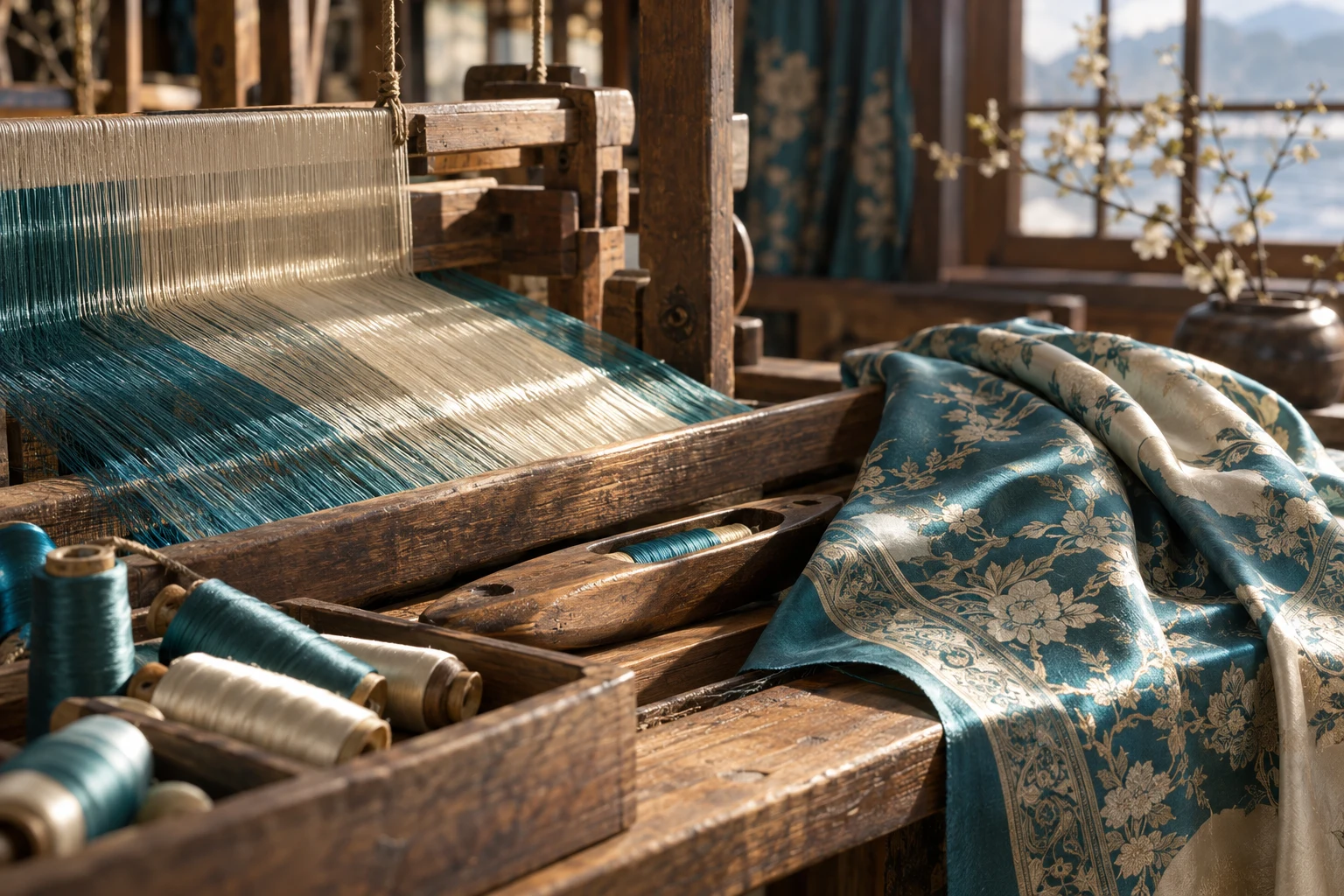
Silk offers a different way into Como. Instead of beginning with a lake view, begin with a piece of cloth and ask how it came to exist. The question opens a world of skilled work: preparing fibers, controlling threads, designing patterns, applying color and finishing a material so that it behaves in a particular way. The elegance of the final fabric depends on many decisions you cannot see at first glance.
Look beyond the finished scarf
Como’s Silk Museum preserves machinery, tools, documents and samples associated with the area’s textile production. Its exhibition follows the manufacturing process rather than treating fabric only as a luxury object. That perspective is useful because it restores the workshop, the laboratory and the worker to a story that can otherwise become a simple parade of beautiful products.
A scarf in a shop window may take seconds to admire. Understanding its making requires you to slow down. Notice the density of the weave, the way a surface catches light and the relationship between printed pattern and underlying material. These observations do not make you an expert, but they give you more interesting questions to ask.
Follow a sequence of transformations
The museum’s room sequence covers stages including twisting, weaving, dyeing, printing and finishing. Think of each stage as solving a different problem. Thread needs suitable properties; a loom needs controlled movement; color needs a reliable method; the final surface needs to suit its intended use.
Do not worry if the machinery initially looks complicated. Choose one process and try to understand what goes in and what comes out. Where does the material move? Which action is repeated? What kind of precision does the work demand? Looking for the task performed by a machine is often more productive than trying to memorize its technical name.
Give skill a place in the story
Industrial heritage can be easy to overlook on a scenic holiday because its buildings and objects are not always presented as postcard attractions. Yet they explain how a place earned a living, trained people and developed specialized knowledge. A textile district is also a network of judgment: someone must decide when a color is right, a surface is ready or a defect matters.
When you see sample books or tools, imagine them in use rather than as isolated museum objects. A sample helped someone compare possibilities; a tool made a particular action repeatable. This approach connects beautiful design with practical work and makes the visit relevant even if you have never tried weaving or sewing yourself.
Connect the museum with the city
Check current opening information and the journey to the museum before setting off. It is better planned as a chosen cultural stop than assumed to sit on every short waterfront walk. Our short-visit guide helps you decide whether the available time is enough for a focused museum visit or better used elsewhere.
Afterward, look at textiles in the city with a more curious eye. Ask about where an item was made, what the material is and how it should be cared for. A local retail address alone does not tell you the complete production story. Thoughtful shopping begins with specific questions and a product you actually want to use.
If you travel with children or someone new to museums, turn the visit into a sequence of small questions rather than a lecture. Find one moving part, one repeated pattern and one tool whose purpose is unclear. Asking a museum educator about a specific object can open a much livelier conversation than trying to summarize the entire industry at once.
Follow the thread into a wider itinerary
Como’s textile heritage makes an especially useful companion to Milan’s fashion history and visitor guide. The relationship encourages you to think about fashion as a chain of materials, skills, design and presentation. It does not mean a museum visit or a shopping experience includes entry to an official fashion show.
Within the lake area, compare cultural experiences or continue with our rainy-day ideas. Silk gives you a reason to look inward for an afternoon. You may leave with a deeper appreciation of the region and a rather different relationship with the next piece of fabric that catches your eye.
Sources & further reading
Turn a good read into a great day.
Find a highly rated Lake Como experience that brings these stories to life.
Explore related experiences →