Lecco’s Palazzo delle Paure: how should you choose what to see?

Palazzo delle Paure has a name that sounds like the beginning of a ghost story, but its documented origin is more administrative: the building housed the financial authorities. Today it is a museum destination in central Lecco, close to the waterfront, where art, photography and the culture of mountaineering can lead a visit in different directions. The best plan begins by deciding which of those subjects interests you most, rather than assuming that every floor deserves equal time.
Be precise about the destination
The museum is at Piazza XX Settembre 22 in Lecco, on the lake’s southeastern branch. It is not in Como city. If you are arriving from Milan or staying around the central lake, plan the actual route to Lecco and your return separately. Our guide to Lake Como without a car can help you think through connections, but it does not replace current rail, bus or boat information for your chosen journey.
The municipal and museum accounts describe an early twentieth-century building using a neo-medieval architectural vocabulary. Their published construction dates differ, so it is more responsible here to keep that broader dating than to present one precise year as settled. The important visual point is that a medieval-looking facade need not be a medieval survivor. Look at it as a later civic building choosing a particular historical language.
Choose a route through the museum’s different subjects
SiMUL identifies temporary exhibitions, a modern and contemporary art gallery, graphic and photographic material, and a section devoted to Lecco’s mountaineering tradition. Those are related through the city and its collections, but they are not one continuous story that every visitor must follow in full. Check what is currently accessible, then choose a main interest and one contrasting section.
For an art-focused visit, select two works that handle space differently. One might create a recognisable setting; another might organise colour and form without describing a place. Ask where your eye moves first and what holds it there. Read the labels after forming that initial response. A simple observation, tested against the museum’s explanation, is more useful than trying to attach a movement’s name to every object immediately.
Give photographs their own kind of attention
The museum describes photographic holdings connected with Lecco, its territory and wider historical subjects, with material displayed in rotation. A photograph can feel like a transparent window onto the past, but framing, viewpoint and purpose still matter. Look for what has been included and what lies beyond the edge. A street scene may record a building while also revealing work, traffic or the photographer’s choice of an unusual angle.
Do not assume that an image represents an entire community or a typical day. The label may identify an occasion, a commission or an uncertain date. Our guide to Lecco’s Manzoni Museum raises a related question about the difference between evidence and a compelling story. The two museums make an interesting comparison, but their tickets, locations and visiting time need separate planning.
See mountaineering as part of local life
The mountaineering section is presented as a way to understand the relationship between Lecco’s climbing tradition and its social, cultural and environmental setting. Let the supplied objects and accounts guide that connection. Equipment can prompt questions about materials, carrying weight and changing practices, but a museum explanation is not instruction for using historical gear or attempting a climb.
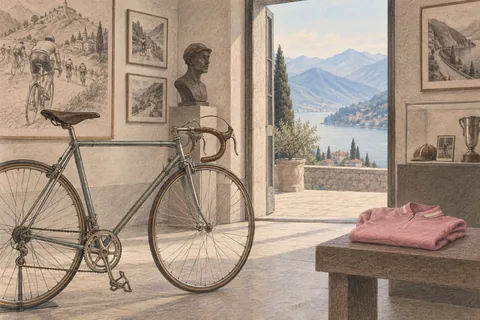
If this strand appeals, our introduction to the Ghisallo Cycling Museum considers sporting objects in another nearby regional setting. For a separate Turin stay, Superga’s hillside visit asks different questions about landscape, travel and a cultural destination. These are comparisons for planning distinct outings, not suggestions that all can be folded into a single lake afternoon.
Check admission at the level of the actual visit
SiMUL’s ticket information separates permanent collections from major temporary exhibitions and provides different ticket choices. Confirm exactly what your selected admission covers. Its current general timetable gives Tuesday a shorter opening window than Wednesday through Sunday, with Monday closed; check exceptional dates and last admission before setting out. A headline exhibition can also have a different last-entry rule.
The official information describes lift access for visitors with reduced mobility. If you need a specific route or service, verify its availability with the museum rather than relying only on the building’s general description. Our Lake Como art and culture collection can help compare experiences by actual place and inclusions. Leave room afterwards for the nearby waterfront: it is a pleasant change of scale after looking closely, without requiring another ticket or another elaborate story.
Sources & further reading
Turn a good read into a great day.
Find a highly rated Lake Como experience that brings these stories to life.
Explore related experiences →