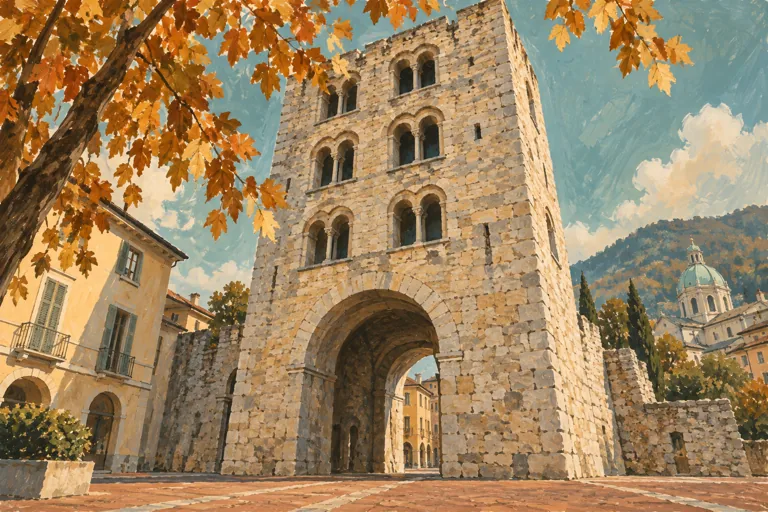
Forte Montecchio Nord: how should you plan a history visit from Colico?

Forte Montecchio Nord changes the usual Lake Como question from “which villa?” to “why defend this particular landscape?” Above Colico, the fort gives a different perspective on the northern lake: roads, valleys and transport connections become part of the story alongside the view. Plan it as a historical visit with its own opening arrangements, rather than an unrestricted viewpoint that happens to contain old buildings.
Colico is the relevant town for this outing. If you are staying in Como, Bellagio or Menaggio, the journey north needs deliberate planning. Our Lake Como base guide is a reminder that places around the lake are not interchangeable. A tour advertised with a Milan departure also remains a Milan departure, even when its destination is beside the water.
Begin with location rather than weaponry
The fort’s official historical account dates its construction to 1912–1914 and places it within the Kingdom of Italy’s northern defensive system. It explains the importance of routes towards the Po plain. This gives you a useful question before entering: how could a position above Colico relate to movement through a much larger region?
Look at the landscape as a network rather than a backdrop. Valleys channel journeys; a settlement is connected to places that may be out of sight. You do not need to reconstruct a military plan to understand that geography mattered. Ask the guide to distinguish the strategic intentions behind a structure from the events that actually occurred there. A building designed for conflict does not prove that every imagined battle took place.
Read the fort as a system of spaces
The operator’s site describes different parts of the complex, including accommodation, circulation and technical spaces. During the visit, follow the approved route and consider how those parts depended on one another. Where did people work, move and rest? How were different functions separated? These questions help turn a collection of impressive objects into an understandable place.
Keep observation separate from inference. You may recognise a passage or a mechanical component without knowing its exact date, function or later alterations. Let the interpretation establish those details. Do not operate equipment, climb barriers or enter an apparently open side passage unless the guide explicitly permits it. A museum setting does not make every surviving feature a hands-on exhibit.
With children, focus on the everyday organisation of a difficult environment rather than turning the visit into a battle game. Ask what people would have needed to carry, store or maintain, then use the guide’s answer to test the guess. The purpose is historical understanding. An impressive view or a large machine can be memorable without romanticising the consequences of war.
Use the current calendar, not a generic opening claim
The official opening page links a 2026 calendar and distinguishes ordinary admission from privately arranged group visits. Check the actual day and departure arrangements before travelling. Do not assume a year-round daily opening or that buying a combined ticket creates extra visiting time. Forte di Fuentes is a separate site, and combining the two requires its own practical plan.
If you need a particular language, assistance with steps or an explanation of the route’s physical demands, ask the operator in advance. A private group arrangement has separate conditions; it should not be confused with an ordinary admission ticket or advertised as available to an individual without confirmation. Keep the reservation evidence and arrive with time to find the correct meeting point.
Make Colico the anchor of the outing
The operator’s location page gives Via alle Torri 8 in Colico and describes an approach from the railway station. Use a current map for the final section and allow your own walking pace rather than relying on a brisk published estimate. If arriving by ferry, check the landing point, onward route and last practical return together. A train timetable and a boat timetable solve different journeys.
Our guides to Lake Como without a car and using the ferries help frame those choices. For another northern-lake cultural stop, consider the Piona Abbey guide, leaving it optional rather than treating proximity as guaranteed convenience.
Browse the Lake Como experiences collection for the rest of your stay, checking each departure town. If Turin is also on your itinerary, its Pietro Micca Museum guide offers a different period of defensive history. Comparing the questions raised by the two places is worthwhile; their dates, routes and visiting conditions should remain distinct.
Sources & further reading
Turn a good read into a great day.
Find a highly rated Lake Como experience that brings these stories to life.
Explore related experiences →