Carate Urio on Lake Como: what can you discover from public streets?

Carate Urio rewards a visitor willing to exchange a list of famous villas for close attention to an ordinary lakeside settlement. The name joins two neighbouring places on the western side of Lake Como's Como branch. Their lanes, churches and changing levels offer enough for a focused visit, provided that you plan around public access rather than treating every attractive gate as an invitation. Begin with the village, not with an imagined private-house tour.
Why does the name contain two places?
The municipality's account of Carate Urio explains the union of Carate and Urio in 1927 while preserving their distinct histories. Looking for that distinction gives a walk a purpose beyond following the shore. Notice where the streets gather, how a church relates to nearby houses and how the slope affects the space between buildings. A combined municipal name does not mean the place was designed as one uniform village.
Keep a simple map available and choose a modest area to explore. A short distance on a map can involve changes in level, narrow lanes or a route that turns away from the water. Rather than promising yourself a continuous waterfront walk, identify the public streets that connect the places you want to see. Allow the actual terrain to set the pace.
What should you notice in Urio?
The municipality identifies the church of Santi Quirico e Giulitta as a useful historical anchor. Its church description distinguishes the surviving older bell tower from later changes to the building, including nineteenth-century reconstruction. That is a helpful reminder that a church's date is rarely a single answer. Different parts may preserve different moments, and a later alteration is part of the history rather than an interruption to be ignored.
Begin outside and look at proportions, materials and the relationship between the church and its setting. If the church is open, enter quietly and follow any instructions, remembering that it remains a place of worship. Do not make interior access essential to the success of the stop unless current arrangements have been confirmed. A closed door still leaves architectural questions worth considering from a public position.
What changes as you move uphill?
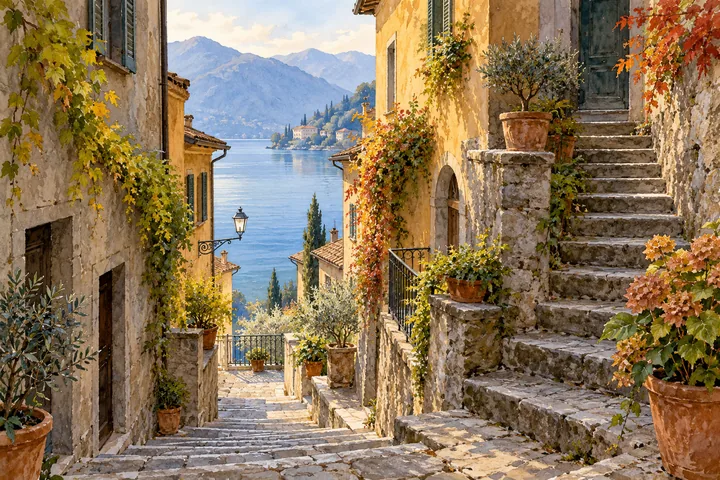
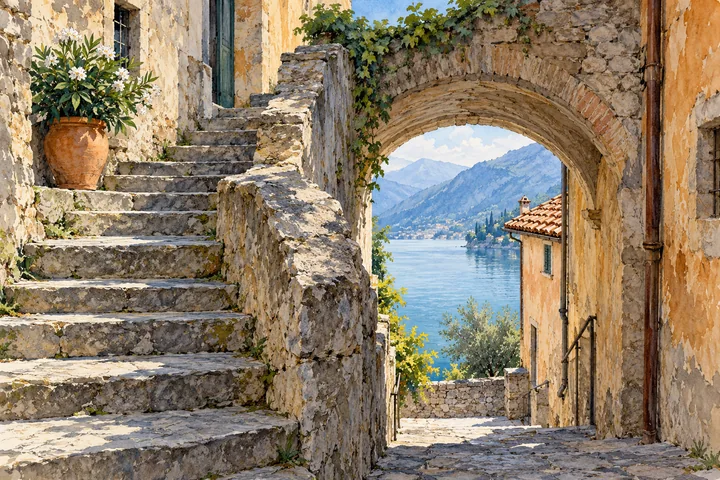
Carate's lanes and the approach towards Santa Marta introduce another relationship with the hillside. The municipal territorial history describes Santa Marta and its devotional setting. A route involving steps deserves a different plan from an easy pause beside the lake. Assess the climb against the weather, daylight and the needs of everyone travelling, rather than assuming that a small village means effortless walking.
There is no requirement to reach every viewpoint. Choose a turnaround point before fatigue makes the decision for you, particularly when surfaces are wet. Our Lake Como mobility-planning guide explains why gradients, steps and the final approach matter more than a broad description such as “near the lake”. Ask about the particular route rather than expecting one accessibility answer to cover the entire municipality.
Which boundaries should visitors respect?
A handsome facade or garden glimpsed through a gate can be appreciated without entering it. The municipal account includes historic private properties, but their inclusion in local history does not establish public opening. Castello di Urio, for example, should not be added to a spontaneous interior or garden itinerary without an explicitly authorised visitor arrangement. Historical interest and public access are separate facts.
Keep photographs to public viewpoints and avoid blocking doors, steps or the passage residents use. A quiet lane is still somebody's daily route, not an empty stage. If you want a villa visit with a defined public programme, choose one with published visitor information elsewhere on the lake rather than trying to turn a residential walk into an unofficial tour behind closed gates.
How should you reach and leave the village?
Check the actual transport stop and current timetable for your date. The presence of a waterfront does not guarantee that a particular boat service calls when you need it, and a bus stop's name does not establish a step-free walk to the place you intend to visit. Decide on a return option before you begin, with enough flexibility for a slower pace.
Our autumn ferry-planning guide can help with the wider journey. If starting in Milan, distinguish the city-to-lake transfer from movement between lakeside villages: Milan Tour Hub's Lake Como excursion guide is about a Milan departure, not a boat or walking tour beginning in Carate Urio. Keep both stages visible in the day's plan.
What makes a good companion visit?
For another day or a carefully paced combination, Moltrasio offers a separate village encounter nearby, with its own slopes and public routes. Compare how each settlement meets the water instead of trying to fit every western-shore name into one afternoon. A pause to read a church facade or follow one lane attentively can be more memorable than repeated arrivals and departures.
Browse our Lake Como village experiences when planning guided options, checking the true meeting point and itinerary. Carate Urio needs no claim of hidden access to justify a visit. Its interest lies in two local histories, a lived-in hillside and the patient work of noticing what is genuinely available from the public streets.
Sources & further reading
Turn a good read into a great day.
Find a highly rated Lake Como experience that brings these stories to life.
Explore related experiences →